Product management guide 2: the core technologies a product should have
Agile, Kanban, prototyping, A/B tests, version control, CRM and payments. What a technical product manager needs to know and why.
Also available in Turkish This post is a translation.
Contents
A good technical product manager needs two critical abilities at a high level: professional communication skill and enough technical knowledge. Today we will talk about why the technical part matters this much.
If you have been part of a project or worked a job, you know that one of the biggest mistakes ventures make is setting off on an uncertain road with whatever is at hand, without good planning and without defining a goal. You usually see this in ventures that try to add everything to the product. On the other side, ventures that start with large budgets and investment can also lose heavily through lack of planning, with no plan for getting out.
For example, in a product it is not clear what will be offered to the customer for free and what will be paid, or the payment systems have not been planned. In this part we will go over the technologies commonly used in digital products, the ones a product manager should know well.
Agile and Scrum
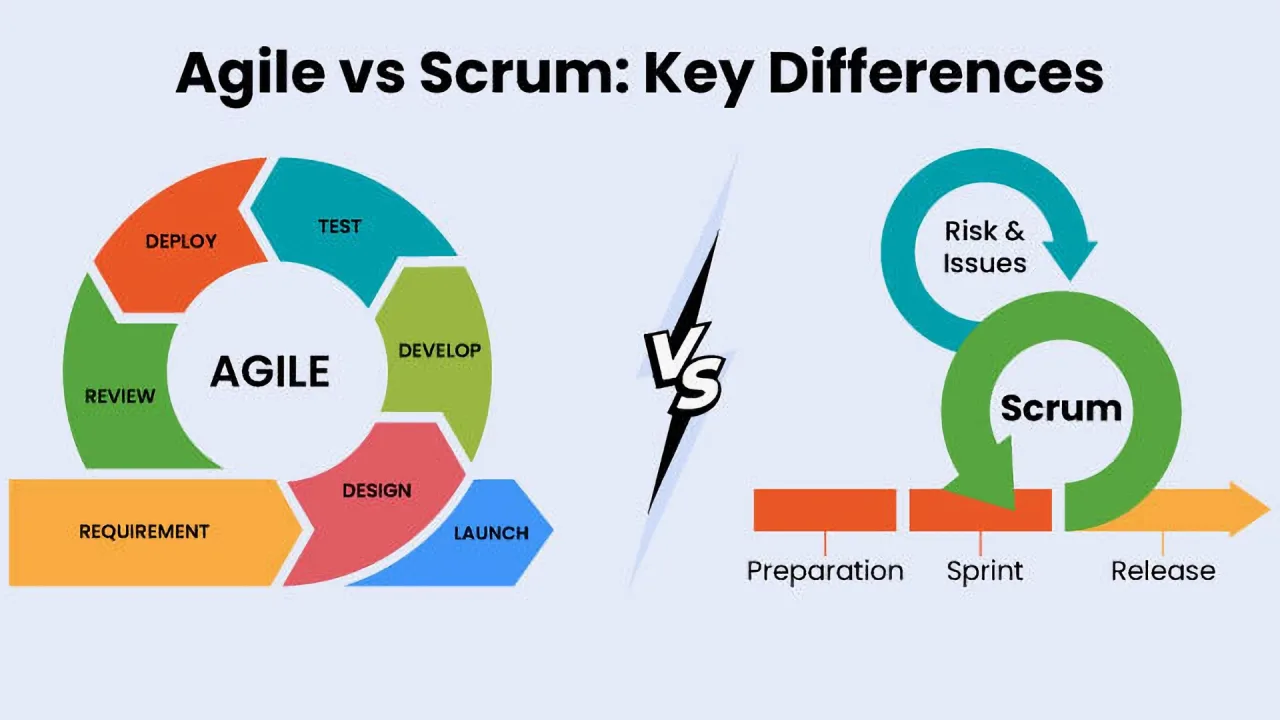
You can think of Agile and Scrum like this. There is a university entrance exam ahead of us and we need to finish every subject before it. But that is only part of a bigger goal. Beyond finishing the subjects, understanding them and being able to apply them matters too.
Agile sets the general principles of how we prepare for the exam. It keeps the process flexible, adaptable and open to continuous improvement. Say we built a study schedule and after a while noticed it was too heavy or not productive. Thanks to the Agile approach we can revise the schedule and make it more effective.
Scrum is a specific framework we use inside that preparation. You can think of Scrum as the mock exams taken every week or every two weeks. Each mock exam is a “Sprint”. In those sprints we work with the goal of finishing and understanding certain subjects. At the end of each sprint we review how far we got on that subject and what we could do better. Thanks to these feedback loops we notice the subjects we are weak in early and get the chance to fix them fast.
The biggest advantage of this approach is that it lets us reach a big goal step by step, in more manageable pieces. The run up to the exam becomes less stressful, more planned and more productive. With Agile and Scrum we do not just reach the goal, we also manage the journey well.
Project management tools
There are tools that make it easier to track our tasks while applying the Scrum technique above. Every enterprise company, for instance, uses a task management system called Jira. There are many alternatives to Jira. Trello, ClickUp and many others are used the same way.
Kanban
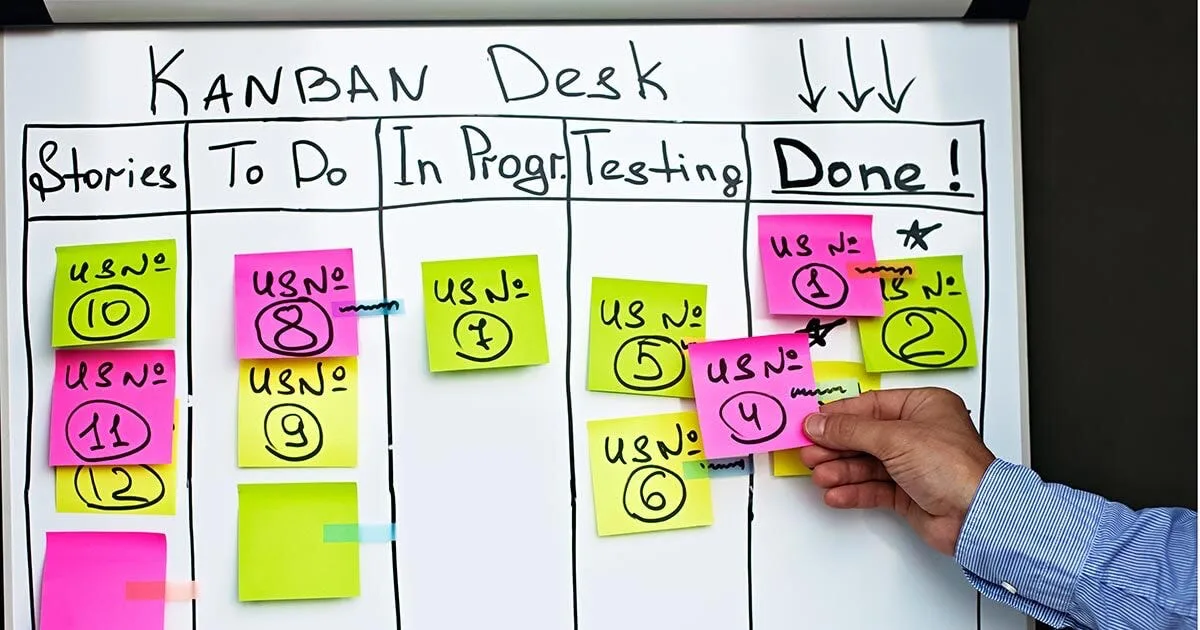
You can think of Kanban as another method that shows us how to work more productively in this process. Kanban is a system that helps us visualise and manage the flow of work. While preparing for the exam we can use a Kanban board like a study plan. The board has columns such as “To do”, “In progress” and “Done”. We create a card for every subject or study item and move those cards between the columns.
With this system we can easily see which subjects we need to work on, which we are working on and which we have finished. Kanban lets us review our workload and our priorities continuously, so we can be more organised and more productive in the run up to the exam.
In short, Agile and Scrum let us plan the preparation flexibly and with room for improvement, while Kanban lets us visualise and manage every step of it. These methods let us reach a big goal step by step and in a more organised way.
Design tools and prototyping
Design tools are what we use to prototype the product in our head. Say we have an idea for a mobile application and we wonder what the real user experience will be. We can find out with certain design tools. Figma and Adobe XD are the most used in the world for this. User experience is something we meet here for the first time. The first meaningful reaction a user gives to the product in our head comes out after the prototype design.
A/B tests and optimisation tools
An A/B test works like this. Say you built a skyscraper and could not decide what the lifts should be like. You do not know which type of lift the people using the building will prefer, in terms of both function and looks. So you build two different lift designs and introduce users to them. Some floors of the building use the first type, others use the second. You watch which lift users prefer and which one they find more functional and more attractive, and you make the best choice from the data you collect.
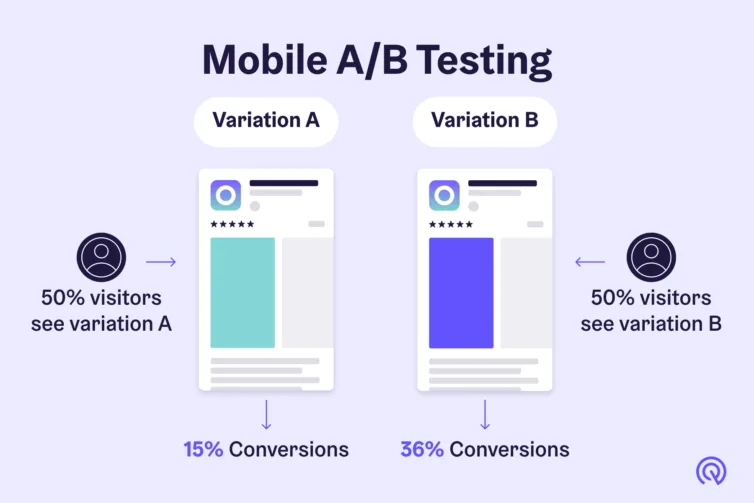
In the digital world, A/B tests are used to show users two or more variations of a website or an application and decide which performs better. On the home page of a website, for instance, we can try two different button colours, one red and one blue. By analysing which button users interact with more and which colour gets more clicks, we decide on the most effective one.
Optimisation tools let A/B tests be run efficiently and their results analysed. Tools like Google Optimize and Optimizely make it easier to create and manage A/B tests and analyse the results. With them you can study user behaviour in detail, decide which variation performed better, and optimise your website or application with the data you collect.
Basic programming knowledge and concepts like APIs
Basic programming knowledge is quite necessary for product management. You cannot plan scaling without knowing queue systems. You cannot understand what integration means without knowing API concepts. So every product manager should know JSON, XML, APIs, queue systems, servers, clients and many other concepts at a basic level. The deeper they go in these, the more in sync they can work with the technical team. For example, when a mobile application needs to exchange data with a server, knowing how APIs are used and how data is exchanged in JSON format makes the process run better. Knowing how data is held in databases and knowing the types of database matters a lot too, because in today’s data age the person who decides which data can be analysed and how is also the product manager. They should go and learn what a relational database is, what a non relational database is, what a realtime database is, and so on.
If I can make a bold claim on this: a product manager with a good backend developer background who has managed to step out of the developer mindset can be well ahead of the others.
Version control systems
Version control systems play a critical role in software development. The idea of versioning came about for reasons like this. We meet a similar situation in daily life. Say you learned a very good recipe at a friend’s house and you want to try it. You write the recipe in a notebook and over time you make various changes to it, maybe changing the amount of spice, maybe adding an ingredient. Each time, you note which changes you made and compare against the older versions.
If one day you want to make the recipe again, you can look through the past changes and find which version tasted best. If the recipe got worse after a change, you have the chance to go back to the earlier, more successful ones.
The same holds in software development. Version control systems are used so that changes made to the code in a project can be recorded and tracked regularly, mistakes can be undone and progress can be watched. That way team members can easily see the changes the others made and manage the project in a more organised way.
CRM and customer feedback tools
CRM, meaning Customer Relationship Management, is the management of relationships with customers. Let me explain this with an example again. Say you are an e-commerce company. You sell products to hundreds of customers every day and you aim to sell to more. You will get responses from your customers in the form of complaints, thanks or suggestions. CRM tools exist to manage those in a controlled way. Their main purpose is to handle customer feedback correctly. If a customer ran into a technical problem, for instance, CRM tools record the problem and pass it to the relevant support team so it can be solved quickly and effectively. In that process they collect all the information and interactions about the customer’s problem in one place, so the support team can find the root cause and manage the fix more efficiently.
CRM systems also let you categorise and analyse customer feedback. Complaints, thank you messages and suggestions can be separated into categories, which tells you where improvement is needed or which products customers like. That information can be used when making strategic decisions, can guide product development, and can raise customer satisfaction.
E-commerce and payment systems
What really makes a product a product is its commercial nature. Without that commercial side, a product would remain only a work of art or an asset with no value. Digital products matter in the same sense. The services we offer through applications that make life easier, translation, photo editing and more, are what set the value of those products. But for services like these to be reachable and usable by people, payment systems play a critical role.
Payment systems are one of the basic elements that let digital products fit into the lives of users. Thanks to them, users can reach the services they need with a single click. In a translation application, for instance, a few taps are enough to translate a text. This is where the payment systems running in the background let users pay for those services safely and quickly. The ease and efficiency digital products offer become genuinely functional when they are combined with the safe and user friendly infrastructure payment systems provide.
A technical product manager should know the basic working logic of payment systems and their integration infrastructure. All payment systems in the world have very similar mechanics anyway.
See you in the next post.